
Description
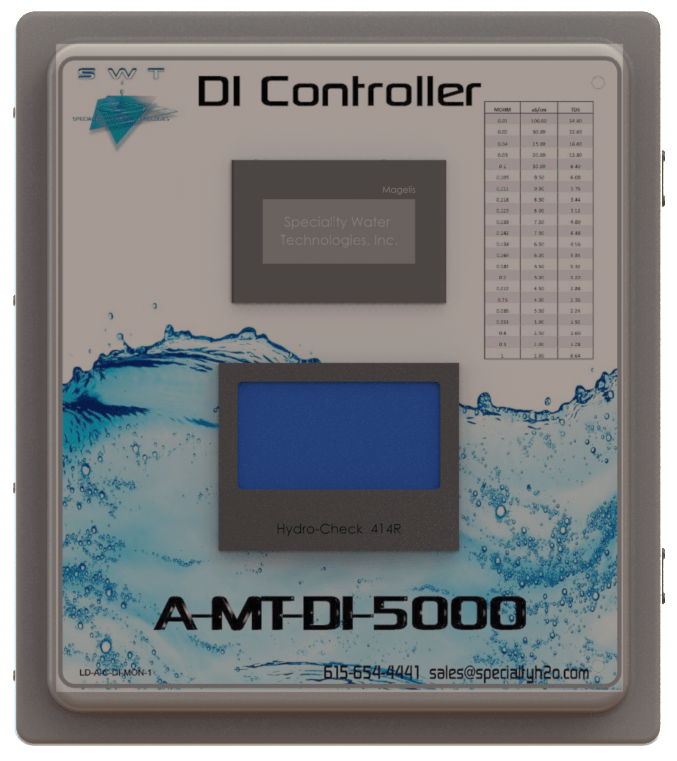
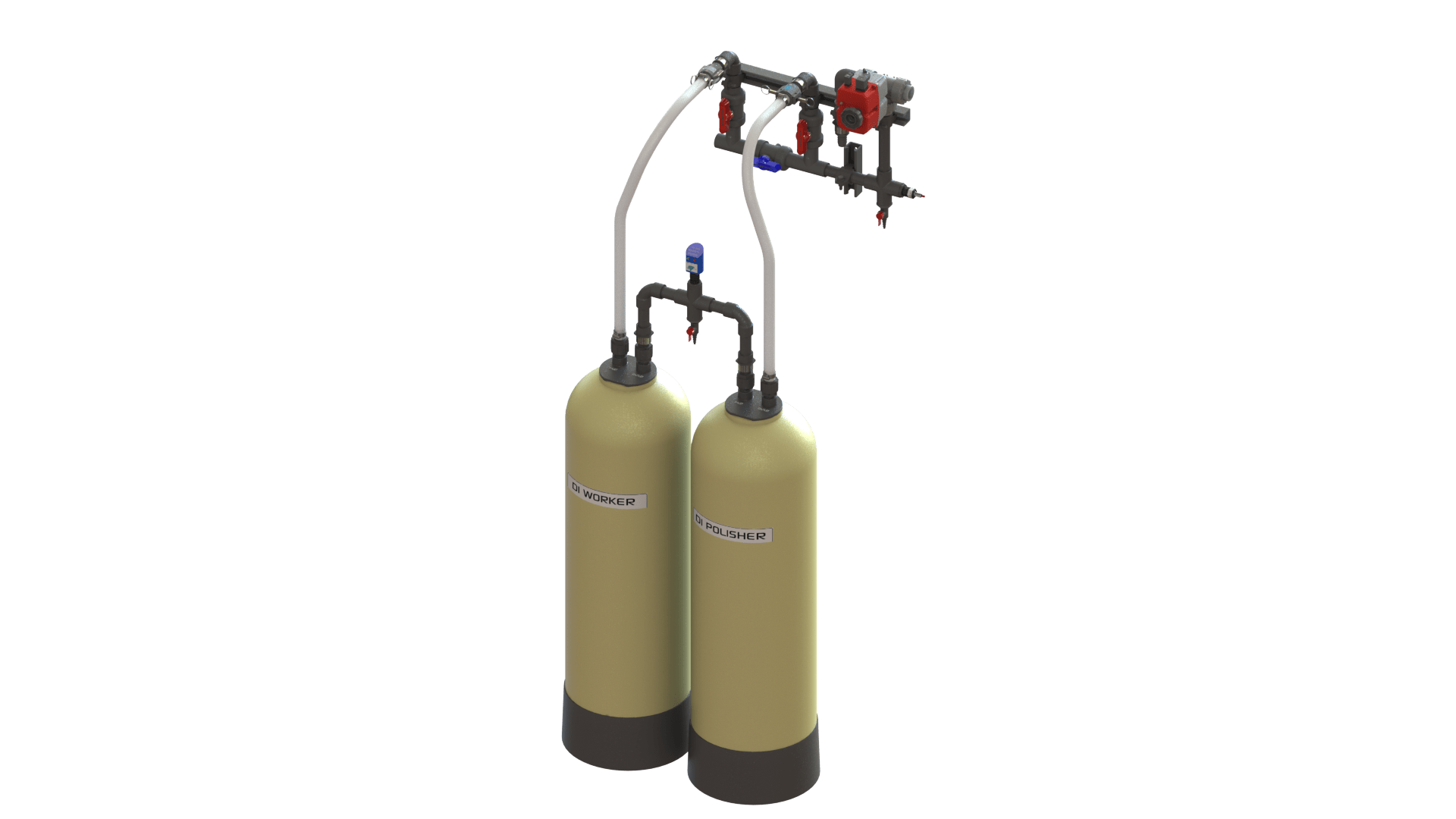
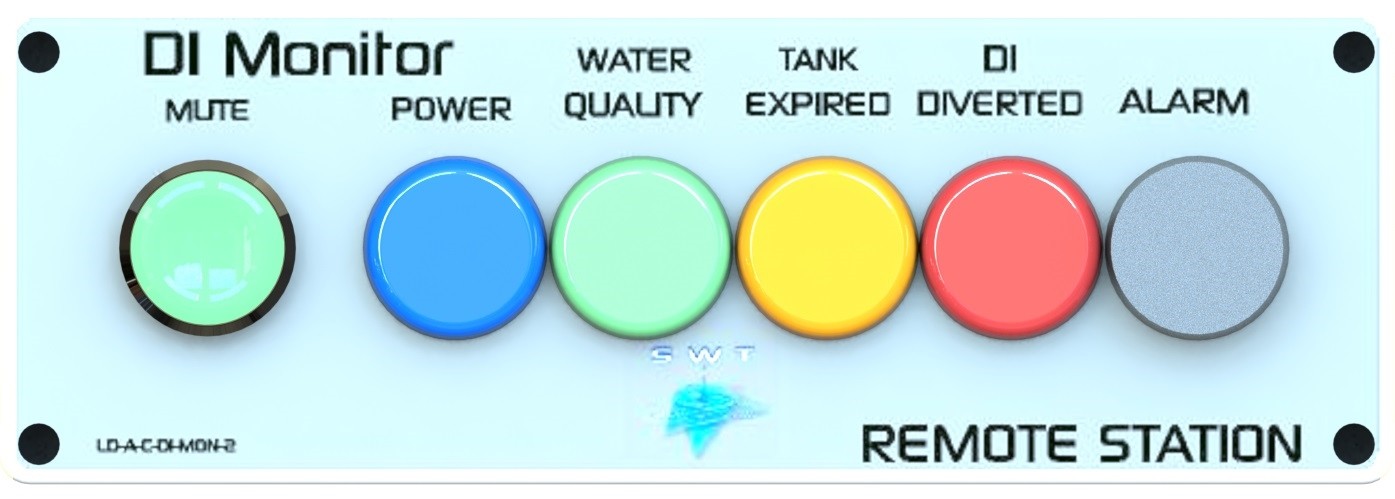
A deionizer (DI) system consists of proper pretreatment, a minimum of two DI tanks connected in series with a visual alarm (red/green) light that will change from green to red when the output (product) water of DI Worker tank is less than one (<2) megohm-cm resistivity.
There is a temperature compensating resistivity probe in the product stream of the DI Polisher tank to detect less than one (<2) megohm-cm resistivity. The staff is alerted via audible/visual alarms. DI product water is diverted to drain until alarm condition is corrected.
The output water from DI tanks should be further treated with appropriate particulate filtration and microbiological contaminant controls.
DI tanks can last anywhere from a few hours to several months. The time to tank exhaustion is dependent upon the quality of the water entering the tank and the amount of water leaving the tank. DI tanks that polish RO water can produce >2 megohm water for a considerable period of time. DI tanks without RO pretreatment can exhaust in a very short period of time.
This component of a complete water treatment system requires very strict, daily monitoring, policies, and procedures to be performed by knowledgeable people that are well trained on actions to be taken when alarm conditions occur.
The DI product water must be tested at least monthly for microbiological contaminants (bacteria and endotoxin).
The DI product water must be tested at least annually for chemical contaminants; however, we recommend testing for chemical contaminants immediately after each DI tank exchange.
Your deionization (DI) controller is of the highest quality. With adequate pretreatment, effective post treatment, proper tank installation, thorough monitoring and proper use, the DI tanks will provide you with water for hemodialysis that meets AAMI standards.
Before you start using deionization (DI) for hemodialysis, you must read and thoroughly understand this entire manual of Operator Instructions.
This manual describes in great detail all of the steps and procedures required to safely utilize DI tanks.
It is unsafe to use DI tanks without a basic understanding of water treatment for hemodialysis and a thorough understanding of this manual.
To emphasize the importance of water treatment and proper use of deionization, the following is quoted from Health and Human Services (HHS) Publication FDA 89-4234:
“Numerous reports have documented that use of inadequately treated water for hemodialysis poses a severe threat to the health and safety of the hemodialysis patient. Despite this, water treatment and water quality are often neglected areas of hemodialysis. A major reason for this neglect is that water treatment is a technically complex subject which is not generally a part of the education and training of clinical staff in hemodialysis facilities.”
Once the deionization tank has been delivered to you, it is the responsibility of the Medical Director to ensure that the deionization tanks are used, monitored, and maintained in such a manner so as to satisfy all applicable standards.